
The Image of Non-White Bodies
By: Aleksandra Lemba
To increase the visibility of non-White/non-Catholic contributions to Polish culture and heritage, TTTM’s National Heritage and Traumatic Memory cluster offers an annual minority artist’s residency at Polin Museum, co-sponsored by Partner Organizations FestivALT and Teatr Powszechny.
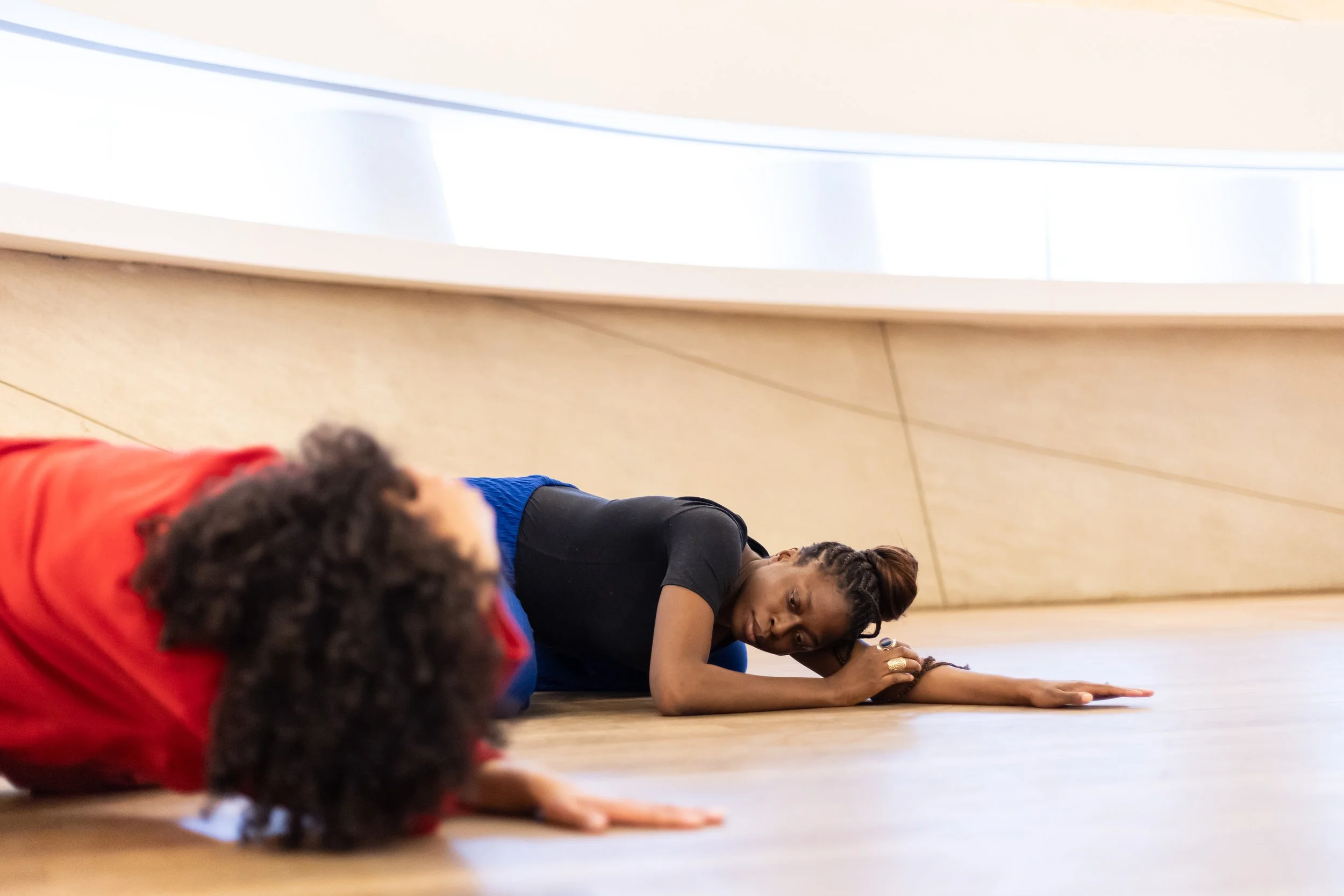
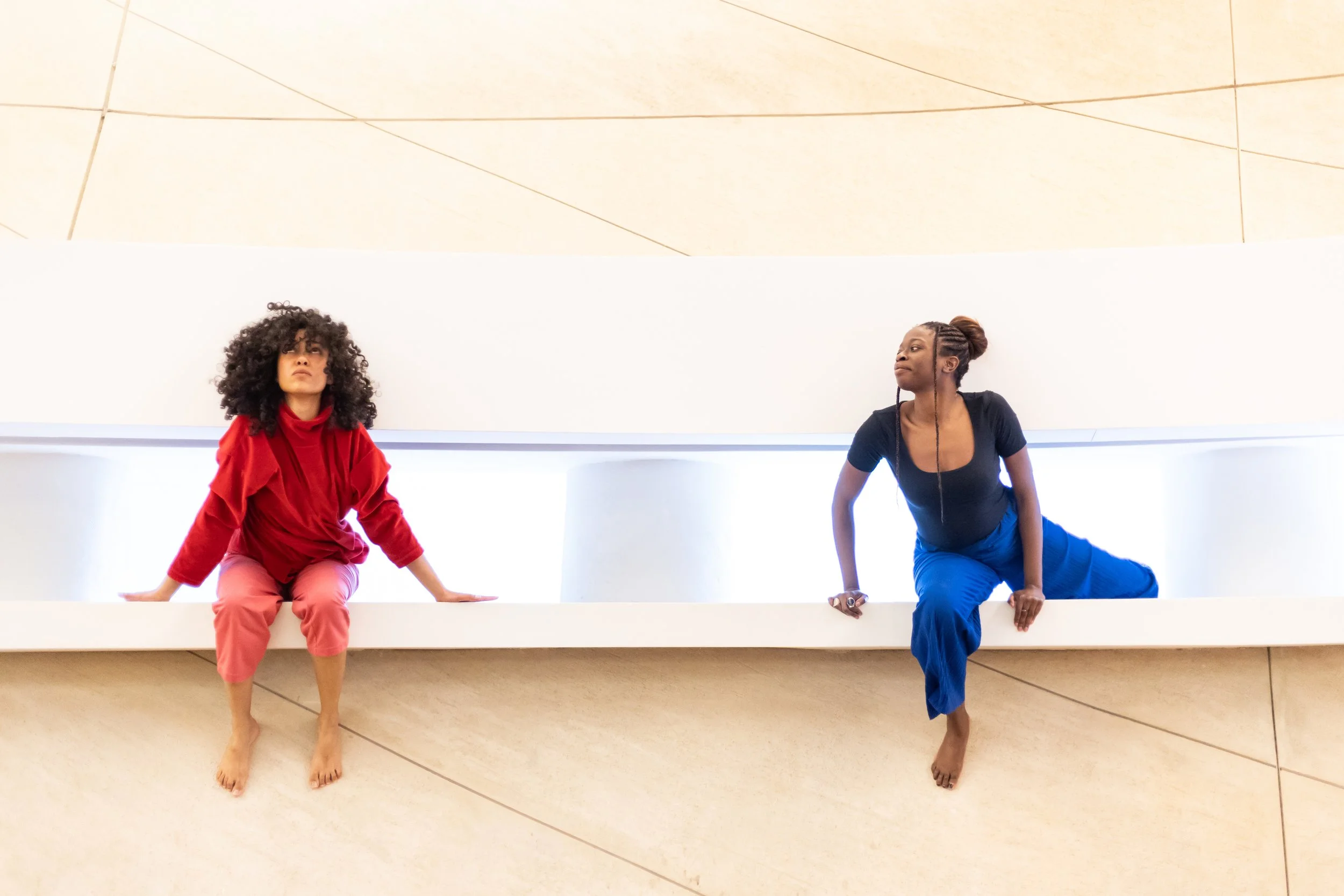

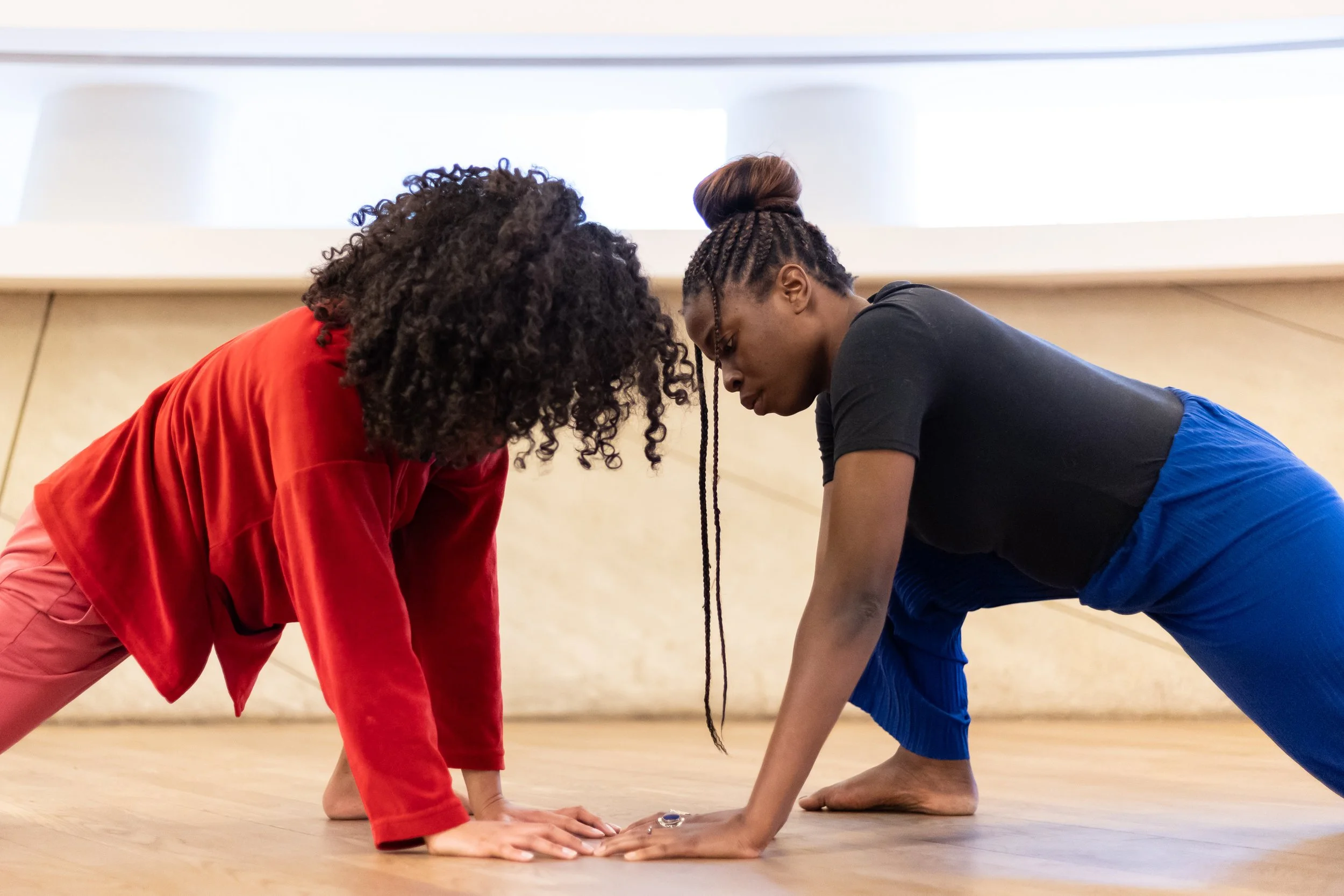
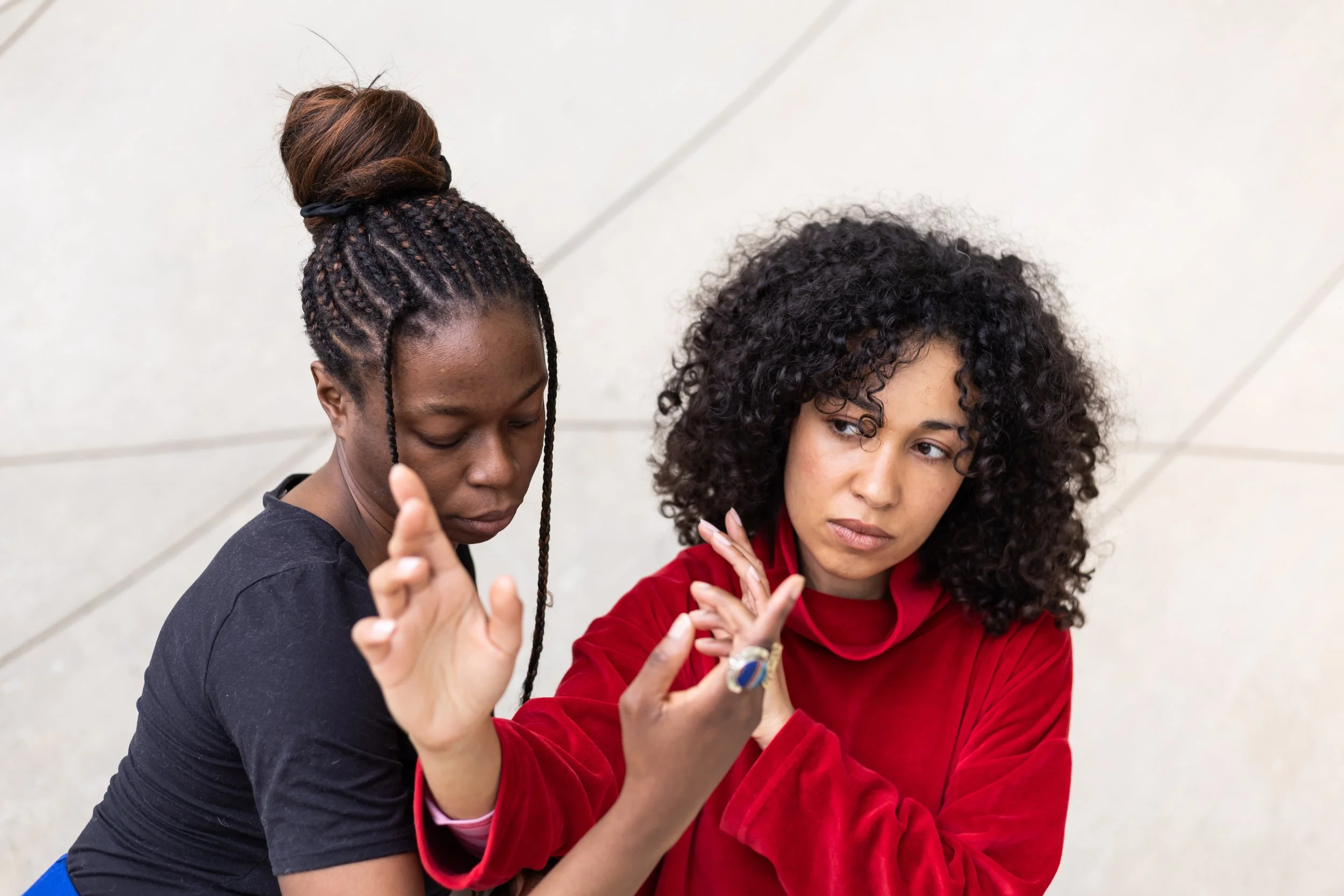
With thanks to Nika Kimata, my travel companion, for your openness to co-experiencing, co-sharing and co-creating this lab space.
A spiral, seen as a shape, carries with it a wealth of metaphorical associations which, in the process of inner experience, can open a space for multidimensional perception of both (meta)physical and emotional states. Experiencing this phenomenon through movement, in a body moving with mindfulness, allows one to view their own experiences in waves, without haste, with the possibility of drawing closer to them or stepping away. This gives space for grounding, pausing, breathing, and then immersing oneself in their layered complexity.
Spiral processing allows for a cyclical return to the same content, seen from a different place, in a shifted perspective, or from a gentle distance that enables observation from a safe remove. The Body Image Concept by Finnish researcher Päivi Pylvänäinen, which served as my point of departure during the residency and accompanied me throughout the process, includes three main components: image properties, body self, and body memory. If placed within a spiral structure, the body self—the part of me that feels and experiences most deeply—would form the innermost layers, reaching from the center. Overlapping layers would be formed by body memory, which holds past experiences stored in the body. The most external layers would represent image properties, referring to how we perceive and interpret our outward appearance, also in the context of social (and personal) expectations and cultural filters. The ability to explore these areas through movement—letting go of the strong need for intellectual understanding of experienced phenomena—allowed me to encounter these three aspects of body image as a creative, organic living tissue. In nonverbal practices, they remained in a dynamic relationship with one another—intertwined dependencies reaching beyond the boundaries of conscious comprehension of reality.
The attempt to explore the themes of racism and prejudice related to skin color within the framework of a research residency unexpectedly met with internal resistance. A resistance stemming from the reluctance to share something that might, for many, remain misunderstood, overinterpreted, or distorted. The difficult questions that arose brought with them a wave of doubt: Is my visibility in the art world, in a society where whiteness is the normative majority, solely dependent on my willingness to engage with socially difficult, identity-based topics? Does the tone of my skin determine how my skills and creative resources are perceived? Does my artistic work have to carry the burden of explaining the world and educating others about my experiences as a person of color? Or perhaps it is simply a form of action towards building a more just world—an endeavor undertaken from the position of a privileged Black woman, born in Warsaw, with access to education and social capital inherited from her family of origin. Among all these questions, a strong desire also emerged—the need for artistic self-realization as a transindividual being, not limited solely by social projections and the stereotypical lens through which people of color living in European geographical spaces are often seen.
My Blackness defines me as a primary part of my life experience—the shaping of my embodied Self. The resistance that arose during the early attempts to give it physical form, I now see as a mirror. A mirror in which I can, with tenderness and a sense of safety, observe myself throughout this process—at the same time serving as a symbolic representation of my inner guardian who protects my boundaries. A mirror that opens up a space of choice, where I can decide whether and how I want to share parts of my truth with the outside world. How much of these stories I can collectively tell, intertwining them with the shared experiences of individuals, communities, and societies affected by exclusion, racism, and discrimination—and what I choose to keep for myself.
Autonomy is a privilege, and yet it should be a right.
How do you see me? How do I think others see me? How do others actually see me? How do I see myself? How would I like to be seen?
I am in a place of meeting with Silence.
Silence. In Silence, questions are born—questions that overwhelm at first, confronting one with discomfort. It is a discomfort I feel physically in my body, remaining still, in a posture where my breath is shallow, my body tense, held tightly, with a sense of clenched viscera. And yet, there is something in this discomfort that strangely makes it feel comfortable.
It offers a sense of unexpected ease, to which I give the name: Awakening from Silence.
Discomfort begins to blur its boundaries. The awakening from Silence is a tender encounter with another person whose experiences, although distinct, converge in every layer of my body’s image. This meeting, based on deeper understanding, has its authentic, intimate form, where there is no need to recount one’s story anew, censor it for the comfort of the other party, explain oneself, or check if one has been properly understood. The return to past, lived experiences takes place outside the known pattern, and in its place arises the possibility of exploring from a place where the ‘here and now’ gently meets what has been. With curiosity and respect for each other’s boundaries. The possibility of being reflected takes on new meaning when the memory of the body of the person sharing the experience with me encompasses my deepest emotions.
Entering into a bodily, unintrusive dialogue and being reflected by a Body that – like mine – is non-white, is an extraordinary and moving encounter for me. I experience a sense of safety that simultaneously strengthens me in my own experiences. Bodily expression, often subjected to judgment by the social context, marked by Western norms and associations, could resonate freely without over-interpretation. And it sounds like freedom.
Therefore, representation is key. Community and visibility allow individual experience to become part of a larger narrative—like a reflection in the surface of water, where I can embrace my past, present and future. The possibility of identifying with a person who shares similar experiences of a non-white body gives the sense that my bodily acts are seen in their true form, without diminishing or interpreting them through prejudices shaped by the process of socialization.
The attempt at assimilation in a society, in a world where wars have been waged continuously for centuries, and where the evaluation of human life is still based on racial and religious criteria, seems like striving for the impossible. The process of reclaiming one’s body is an important action not only for oneself but also for building justice in the collective consciousness. Building resilience and awakening bodily wisdom can be an expression of resistance in a world that desperately tries to fragment us at every level. By building a strong alliance with the body, we also build deeper and stronger human relationships, based on an understanding of our differences.
Despite everything, I remain in the belief and trust that this is the path that leads closer to change. Building an alliance with the body, which is so often a political tool of oppression. Building inclusive bodily practices that carry with them safety, empowerment, creative creation, and a breath of freedom.
——————————————
It is difficult to describe in words what has been experienced through the bodily experience. Language shapes reality, but I feel that the language of the body reaches far beyond the dictionary we are familiar with. In this essay, I try to share my experiences and introspective reflections, while leaving space both for myself and for your story. I invite you to a bodily, processual, and non-linear glimpse into my mirror, which may be a continuation or perhaps the starting point for your own path.
"they could take everything we have
and yet we would conjure this beautiful life anew with our spines
we are masters in building empires from scratch."(Rupi Kaur, Home Body)