

newsletters


event recordings

November 24, 2025
ESPC Spotlight Series - Bridging Community and Collections at the Royal Ontario Museum

December 11, 2024
Curatorial tour of “it comes from the head: A Straw Heritage” with Simone Cambridge

October 21, 2024
Curatorial tour of “Practice as Ritual / Ritual as Practice" with Alice Ming Wai Jim.

September 21, 2023
Build, Manage, & Measure Digital Content in the Humanities with Acacia Berry

May 3, 2023
Moved to Action: A Workshop on Activating UNDRIP in Canadian Museums

February 13, 2023
Awkward Archives. Ethnographic Drafts for a Modular Curriculum with Lynhan Balatbat-Helbock, Margareta von Oswald, and Jonas Tinius

November 30, 2022
How To: SnapThoughts with Museum Queeries Team Members

October 27, 2025
ESPC Spotlight Series - Two Edges of Russian Colonialism: a Comparative Research Project with Kacper Dziekan
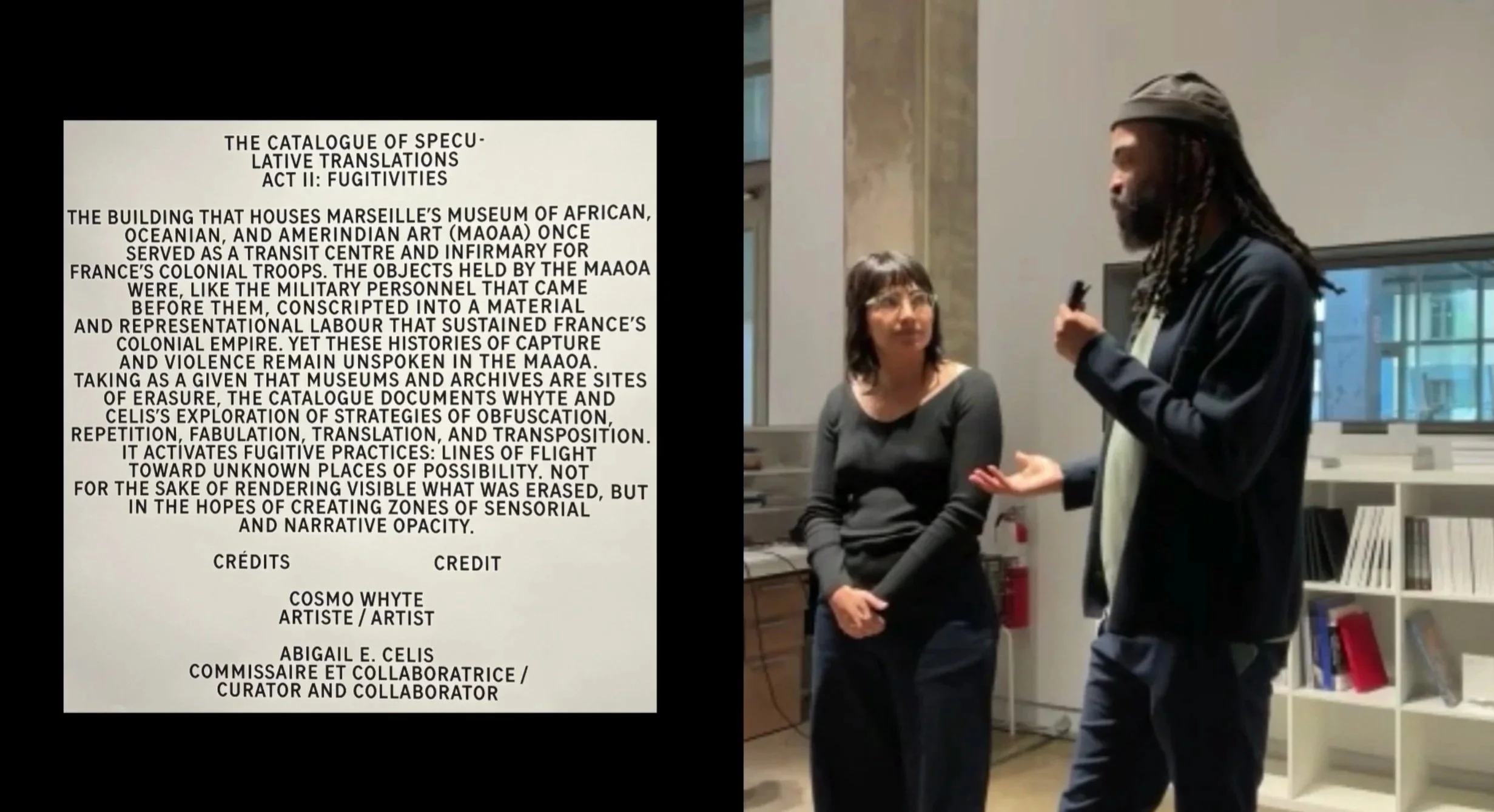
November 22, 2024
Curatorial tour of "The Catalogue of Speculative Translations, Act II: Fugitivities"

October 16, 2023
Two-Spirit, Indigiqueer, and LGBTTQ* Interventions into Museums, Archives, and Curation

June 22, 2023
Digitized Diasporic Memory: Leveraging User-generated and Open Tools for Collective Audio Storytelling with Candide Uyanze

March 13, 2023
Co-designing for Visual Disabilities in Polish and Canadian Museums with Malwina Antoniszczak and Patricia Bérubé

December 6, 2022
Visual Approaches to Difficult History with Jason Francisco

November 17, 2022
Memory Activism and Collaborative Processes of Research Creation
exhibiting theory book series
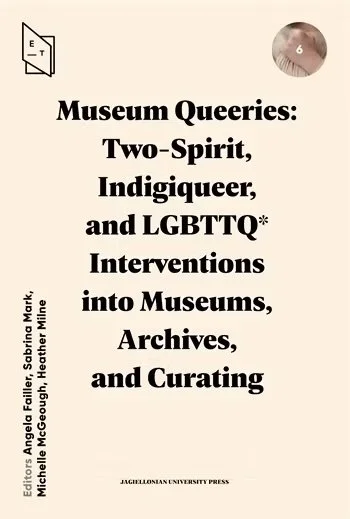
Museum Queeries: Two-Spirit, Indigiqueer, and LGBTTQ* Interventions into Museums, Archives, and Curating
Edited by Angela Failler, Sabrina Mark, Michelle McGeough, and Heather Milne
Jagiellonian University Press
This book explores Two-Spirit and LGBTTQ* contributions to and interventions in museums and museum studies, both as a means of addressing structural exclusions and of opening new modes of productive inquiry and activism. Building on the inroads that have been made into existing museological practice and scholarship, the collection brings new voices and concerns to the field. For the contributors to this volume, “queering the museum” is not only about addressing representations of gender and sexuality, but also challenging white privilege, racism, and settler colonialism among other structures of oppression as they operate alongside and with heteronormativity, homophobia, and transphobia in and beyond museums, archives, and galleries. To challenge these norms in the context of museums and other knowledge producing institutions means that “queering” must also, simultaneously and inextricably, be decolonial. That is, queering and decolonizing are inseparable strategies if we understand that heteronormativity and gender binaries are constructions that stem from colonial logics and are upheld by colonial institutions. The book features essays by artists, curators, and scholars—emerging and established—from a range of disciplines including Art History, Cultural Studies, Curatorial Studies, English, Indigenous Studies, Museum Studies, and Women’s and Gender Studies.
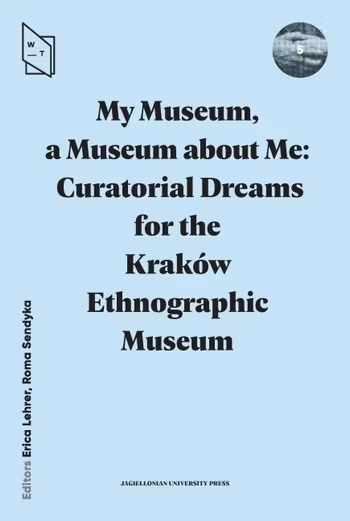
My Museum, a Museum about Me: Curatorial Dreams for the Kraków Ethnographic Museum
Edited by Erica Lehrer and Roma Sendyka
Jagiellonian University Press
This book is the result of a scholarly intervention into the space of the Kraków Ethnographic Museum. While reflecting on one specific project, it opens many questions relevant for reformulating our ideas about both the museum and the academy. The project’s approach to intellectual deliberation is horizontal, engaging students on equal footing with professors, resulting in a publication that embodies collaborative practice. It is also a unique example of how thought can be manifested in creative action, which itself then produces a new object for critical reflection. It is a true blend of theory and practice; an attempt to embed the university in the broader social world while similarly urging museums to speak directly to the societies about which they teach. The project thus proposes both a new form of research and a new take on the presentation of academic knowledge. Thinking through the museum becomes – as promised – not only a critical view of the institution, but also a meditation on society, its rules, and the identities of its inhabitants.
What is your one big idea?
We asked team members to share their one big idea related to their work with TTTM. The goal of this project is to offer individual reflections on specific topics that team members are exploring.
See members’ responses below:

Institutional White supremacy manifests itself in our daily lives.

Important links can be made between the process of Indigenous art-making & curation.

Thoughtful administrative organization can be a form of care.

Communities of care are essential for museums to rethink complex collections.
how-to guides

ACCESSIBLE SOCIAL MEDIA GUIDELINES
Are you curious about strategies to make your social media content more accessible? These guidelines share advice on making social media content easier to access for more people. Drawing from the "Accessible Social Media" webinar hosted by Accessibility Services Canada on February 13, 2025, it highlights approaches to make text, images, and videos more accessible online.

COMMUNITY CARE ACTION PLAN
Given how COVID-19 negatively impacted our 2023 Annual Gathering, the 2024 organizers developed an Action Plan to encourage the group to embrace the notion of community care, and to reject black-and-white, perfectionist thinking regarding COVID risk mitigation.

SNAPTHOUGHTS HOW-TO
Originally developed by the Museum Queeries Cluster, SnapThoughts are brief reflections that capture first or lingering impressions of an exhibition, ranging from the analytical to the affective and personal. SnapThoughts encourage researchers to engage critical thinking skills while experiencing the exhibit and are particularly effective in creating concise expressions that focus on one aspect of an exhibit, rather than attempting a comprehensive overview.