
Intergenerational Engagements: Reflecting on Thinking Through the Museum in Cape Town
BY REBECCA FRIEND (Research Assistant - Children’s Museology Cluster)
October 2, 2026
As I prepared to travel to Cape Town this past July with the Thinking Through the Museum (TTTM) project for our week-long annual gathering, I felt eager to see examples of community-engaged museum practice on full display. Having spent my training as a public historian encountering multiple references to the District Six Museum’s participatory frameworks and community-first curatorial strategies (Gibson 2009; Rassool and Prosalendis 2001; Soudien 2019), I looked forward to seeing these same approaches replicated across a number of institutions.
While this did indeed turn out to be true, and I had the memorable opportunity to participate in a number of curatorial sessions and gallery tours that foregrounded the importance of community involvement in museum projects, what surprised me was the number of initiatives that referenced not only community engagement, but intergenerational engagement as well.
Perhaps I was primed to notice these engagements, given my affiliation with the Children’s Museology Cluster and the way I spent my first week on the TTTM trip. Together with Dr. Monica Eileen Patterson, Co-Investigator and Coordinator of the Children’s Museology (CM) Cluster, and four of her other CM Research Assistants – Chun-Hui Wang, Emily Jenkins-Moses, Hiba Burqan, and Tanha Gomes – we facilitated a one-week Winter Curators Camp (WCC) for 25 child participants aged 12-16 at the Ihlati Bush Camp just outside of Cape Town. The camp culminated in an exhibition co-curated by the young participants that opened at the Cape Town Museum of Childhood less than a week after the camp concluded.
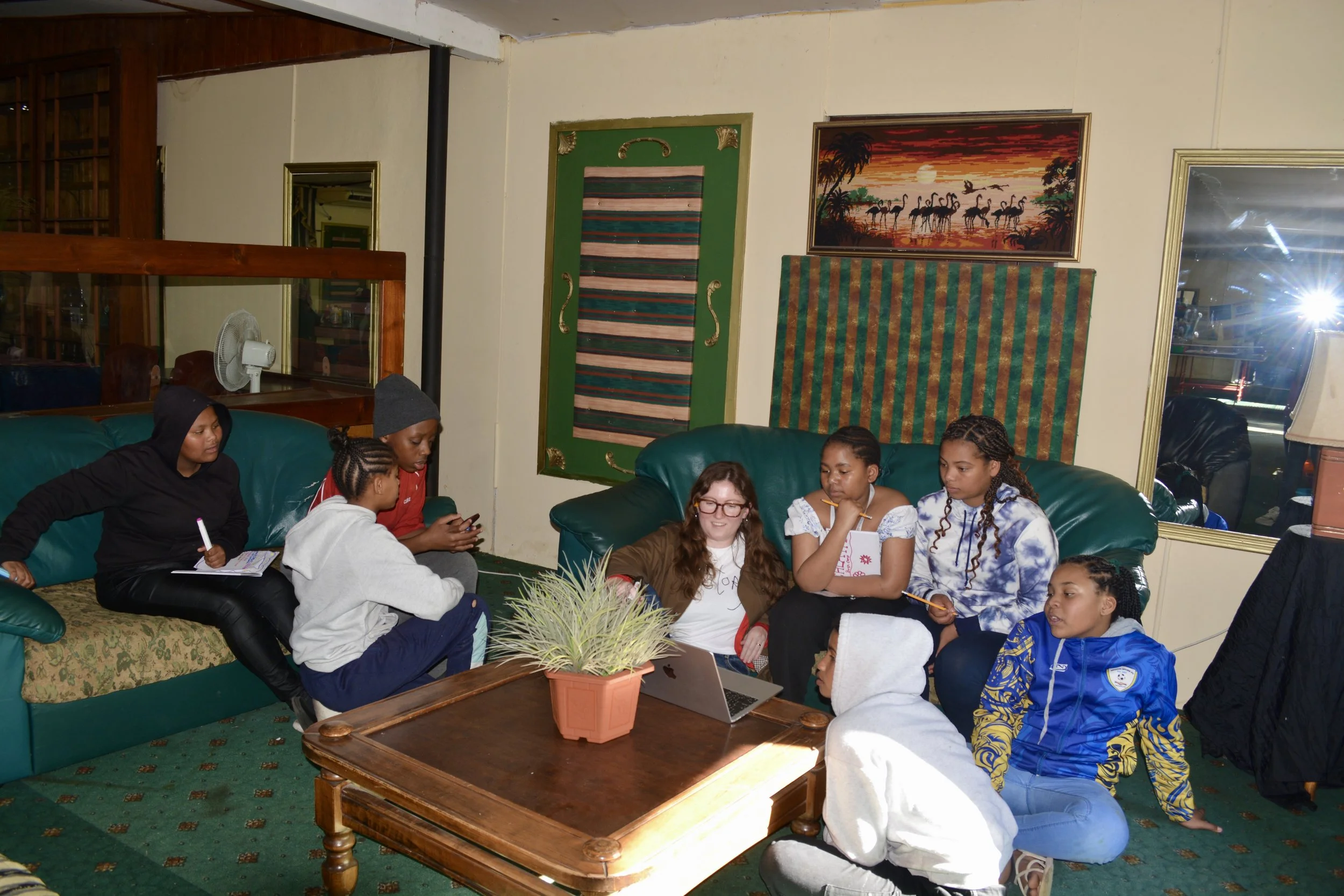
Working with the Winter Curators Camp participants during an exhibition design session.
WCC participants were members of the Children’s Movement, a national non-profit organization established in 1983 by Marcus Solomon, an anti-apartheid community organizer, to help children coordinate themselves into community groups in order to bring about social change. More specifically, participants came from various chapters of the Children’s Movement across the Cape Flats, representing specific communities and engaging with one another, as well as with us as camp facilitators, across linguistic divides (Afrikaans, isiXhosa, and English).
For six days, our group of facilitators engaged with the 25 young curators on workshops related to material culture, intangible culture and remembrance, self-portraiture, exhibition design, promotion, and storytelling. While we offered our own insights into the experience of designing an exhibition for a museum space, we learned from the WCC participants about their lives, interests, families, communities, and rationales for putting together an exhibit centred on their own stories.
From one sixteen-year-old participant, Lisakhanya Malahlekana, we heard that she wanted visitors to the exhibition to “know how we never took after our [and your] forefathers’ hatred. We love each other as one and there’s no discrimination between us.”
These conversations, along with many more about the lived realities of the young participants, unfolded throughout the week, providing me and our team of facilitators with valuable insights into how these young participants see themselves and their roles within their communities, and how they want those roles projected to the world. Together with our curators, TTTM team members visiting Cape Town for the annual gathering, and other adult members of the Children’s Movement, we celebrated the successful launch of their exhibition Young Voices / Big Visions at the Cape Town Museum of Childhood on July 23, 2026.
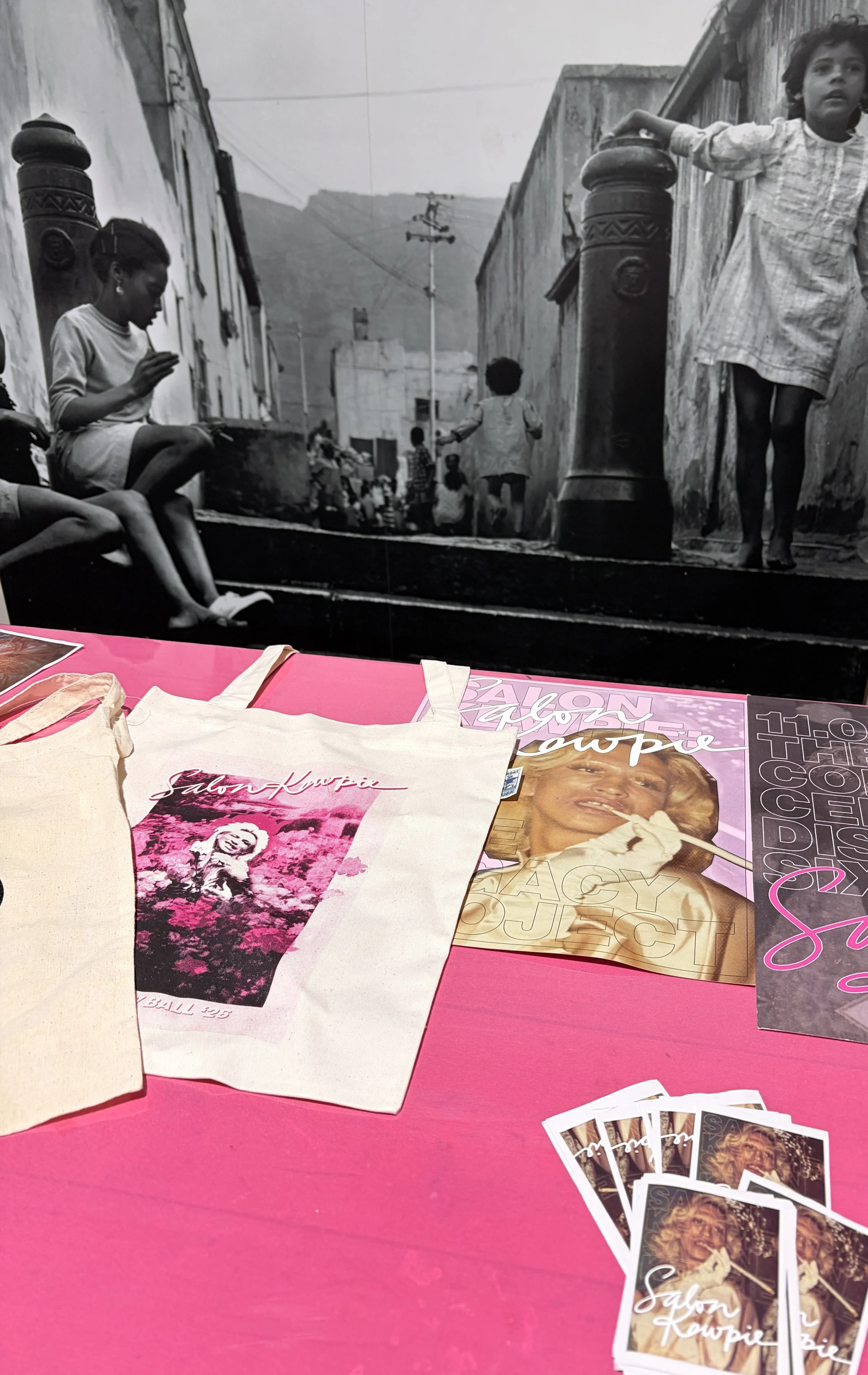
Photos of the 2026 “Salon Kewpie” materials on display at the District Six Museum Homecoming Centre.
In anticipation of this launch and in reaction to the week spent learning with and from the young curators, when the TTTM annual gathering kicked off on July 20, I was poised to notice examples of intergenerational museum practice across other sites we visited. Most notably, our first stop to the District Six Museum and Homecoming Centre brought us into close encounter with the exhibition KEWPIE: Daughter of District Six, whose narrative centred around the life of Kewpie (1941-2012) – a hairdresser and integral facet of District Six’s queer community.
As part of the programming for this exhibition, museum staff described how they orchestrated a youth project that brought young people from across Cape Town to the museum. There they engaged with the Kewpie photo collection, originating from the GALA Queer Archives in Johannesburg, and participated in the production of the 2026 edition of Salon Kewpie: The Legacy Ball, bringing queer ballroom culture to the District Six Museum.
This type of intergenerational collaboration engaged a new cohort of queer youth across Cape Town by platforming their contemporary experiences and historical legacies within the museum space. In doing so, the District Six Museum brought a new audience to their institution – one whose experiences might not otherwise have been reflected in their displays.
On the third day of our TTTM annual gathering, we had the opportunity to engage with another collaborative exhibition that crossed generational divides. Facts and Fabulations, mounted at the Iyatsiba Lab gallery at the University of the Western Cape’s Centre for Humanities Research, combined archival research with augmented reality (AR) installations and student storytelling to question how archives shape knowledge and narratives.
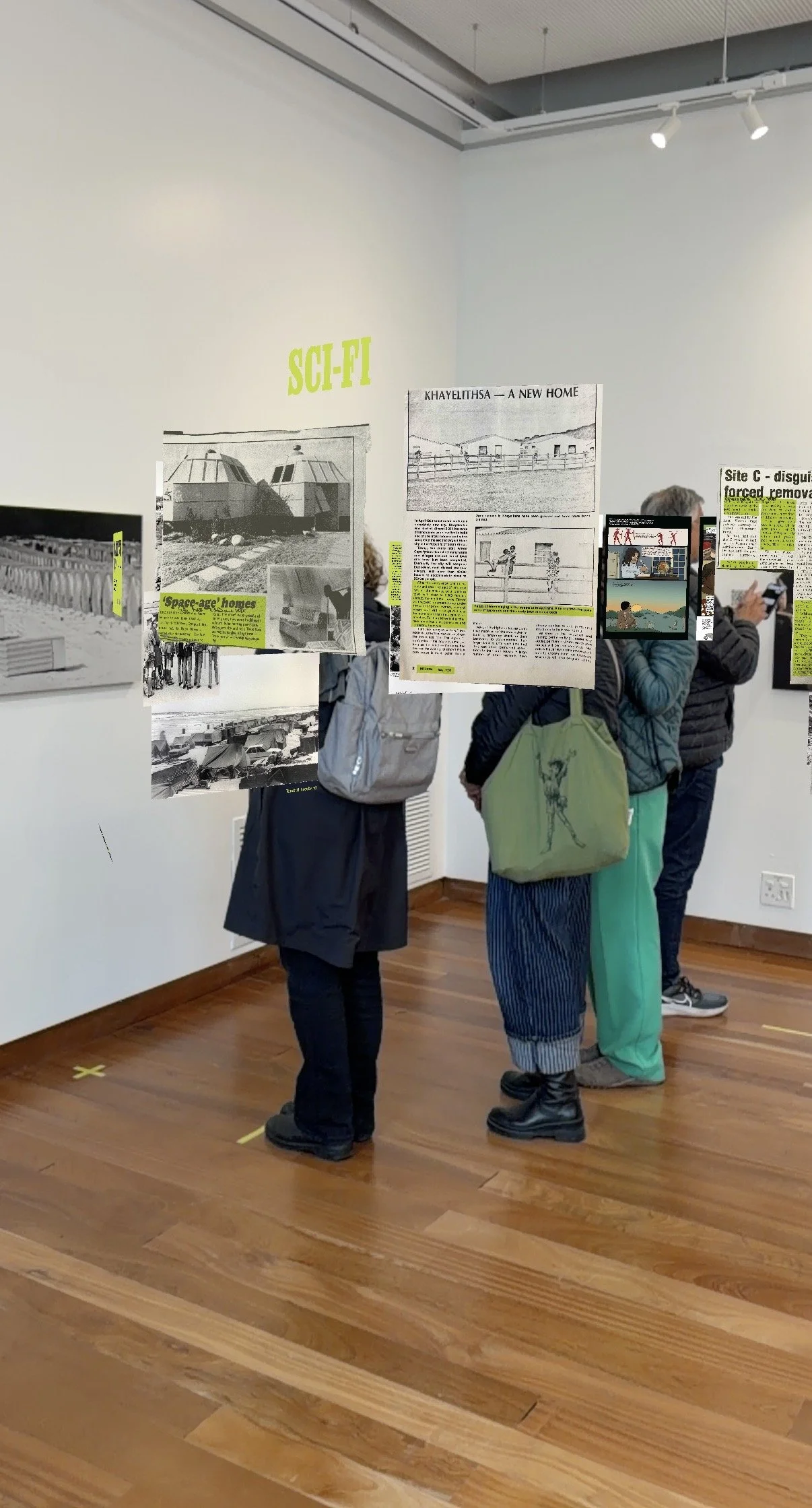
TTTM members engaging with the “Facts and Fabulations” AR installations.
Curated by Professor Marcos Martins, the AR installations were enhanced by recorded “fabulations” produced by undergraduate students engaging with the archival materials that formed the basis on the exhibition. Their creative interpretations of the materials expanded understandings of truth and narrative, allowing visitors to access multiple layers of interpretation and reconsider how knowledge is produced.
With other intergenerational engagements unfolding throughout the week – from young tour guides adding layers of contemporary context to historical displays, and conversations about engaging children in museum practice to address colonial legacies – I felt encouraged to see more than the community-engaged practice that I expected to encounter during the trip. Instead, I also saw demonstrations of how this community work can be extended to even its youngest members, creating opportunities for young people to not only participate in museums, but shape the way we tell stories, preserve memories, and imagine the future.
Bibliography
Gibson, Laura. 2009. “District Six Museum’s Critical Pedagogy: Making Spaces to Heal Community Memories.” Faculty of Information Quarterly, 1 (2): 1-9.
Rassool, Ciraj and Sandra Prosalendis. 2001. Recalling Community in Cape Town: Creating and Curating the District Six Museum. District Six Museum.
Soudien, Amie. 2019. “Memory, Multiplicity, and Participatory Curation at the District Six Museum, Cape Town.” Critical Arts 33 (6): 67–82.